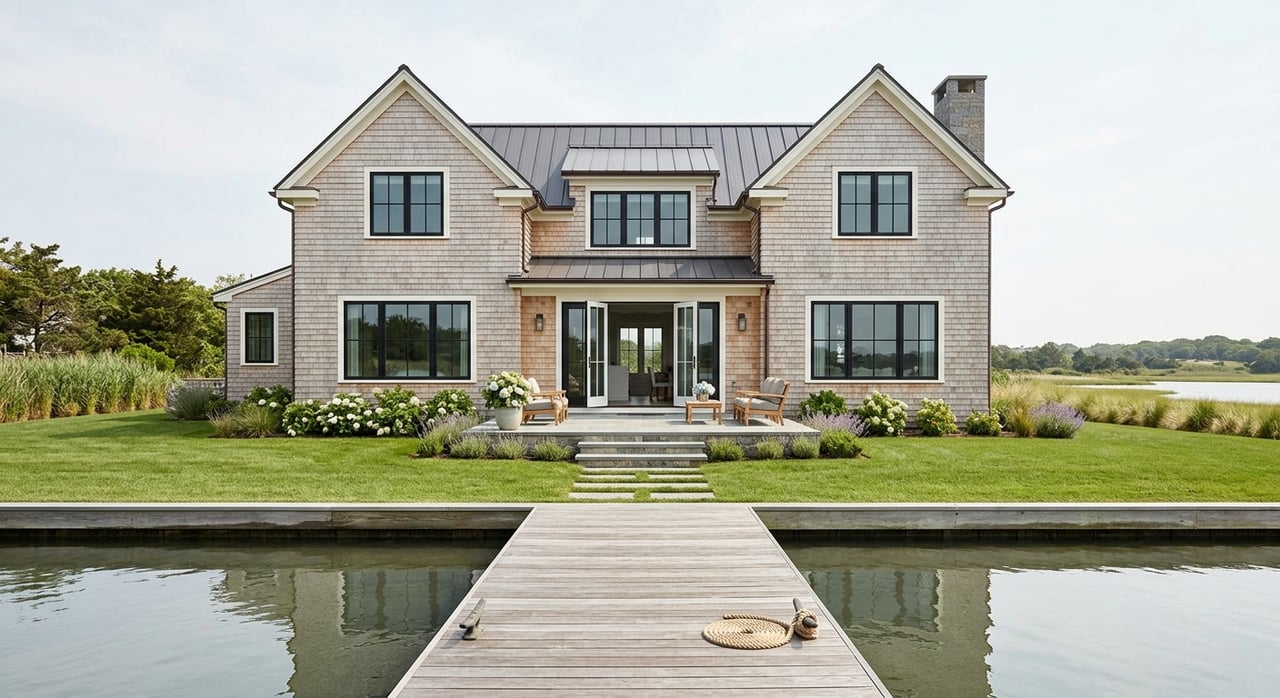
What does waterfront living in Sag Harbor actually feel like once you get past the postcard view? If you are considering a home near the harbor, you are probably thinking about more than scenery. You want to know how the village functions day to day, what the seasons feel like, and whether life by the water here is as convenient as it is beautiful. The answer is nuanced, and that is exactly what makes Sag Harbor so compelling. Let’s dive in.
Waterfront living is part of village life
Sag Harbor is not a waterfront community where the shoreline sits apart from everything else. The village is compact, measuring just 2.3 square miles in total, with 1.8 square miles of land and 0.54 square miles of water, and its 2020 population was 2,772. According to the village’s Local Waterfront Revitalization Program, the harbor and shoreline are treated as a managed public resource that shapes the identity of the village itself.
That matters if you are thinking about buying here. In Sag Harbor, the waterfront is woven into daily life rather than isolated as a private amenity. The harbor, marina activity, public access points, and village center all work together to create a setting that feels active, connected, and distinctly local.
Boating shapes the daily rhythm
If you spend time on the water, Sag Harbor stands out for practical reasons as much as lifestyle appeal. The village’s Harbor and Docks office describes Sag Harbor as one of the major cruising ports on eastern Long Island, with seasonal and transient dockage and moorings available during boating season from April 1 through October 31.
This is not a harbor that exists only as a view. Dock staff monitor VHF, free pump-out service is available, marina guests have access to heads and showers, and 30/50 amp power and potable water support day-to-day boating needs. If you are the kind of buyer who wants a waterfront property because you truly plan to use the harbor, Sag Harbor offers a setup designed for real activity.
The harbor also gets busy. The state’s Harbor Management Plan executive summary notes that docking, anchorage, and marine support services are all part of the harbor’s function, and congestion can build at key points during peak boating periods. In other words, harbor life here is vibrant and operational, especially in summer.
Walkability is a major advantage
One of the biggest differences between Sag Harbor and many other waterfront areas is how easy it can be to move between the shoreline and the village center. State waterfront policy documents identify public waterfront access and recreation points including Haven’s Beach, Marine Park, Long Wharf, Windmill Park, Cove End Park, and the Village A and B Docks, while also emphasizing pedestrian and visual connections between the waterfront and downtown. You can see that broader vision in the village’s waterfront revitalization policies.
For you as a buyer, this means the waterfront lifestyle is not limited to boating or water views. It can also mean walking into town, spending time near Long Wharf or Marine Park, and enjoying a village layout where restaurants, shops, and public transit are all close to the marina area, as noted by the harbor office.
That convenience is a real part of the appeal. Sag Harbor feels like a village where the water and Main Street are in constant conversation with each other. You are not choosing between a town experience and a waterfront experience. In many parts of the village, you are getting both.
The harbor is also a gathering place
Waterfront living here is social in a very specific way. The village materials describe Sag Harbor as a place known for history, culture, natural beauty, and a deep-water harbor, and the entire business district is listed on the National Register of Historic Places. That gives the waterfront a civic role as well as a scenic one.
The chamber’s recurring use of Long Wharf and Marine Park for community events such as HarborFest and the Arts & Crafts Fair reinforces that point. These are not tucked-away edges of town. They are part of how people gather, stroll, and experience the village throughout the year, especially during the warmer months.
Summer brings energy and congestion
It is important to be honest about the tradeoffs. Sag Harbor’s planning documents are clear that traffic increases significantly between Memorial Day and Labor Day, with backups on Route 114 and around Main Street and Bay Street. The village has studied ways to improve traffic flow, parking, pedestrian safety, and bike connections, according to its planning materials.
If you are buying for summer use, that seasonal energy may be part of the reason you are drawn here. There is more activity, more movement on the harbor, and more going on around town. But that also means less spontaneity when driving in and out during peak weekends and busy afternoons.
For many buyers, this is an acceptable tradeoff because so much of Sag Harbor can be enjoyed on foot once you are in the village. Still, it is worth understanding that summer waterfront living here comes with a real shift in pace, pressure, and logistics.
The off-season feels different
One of the pleasures of Sag Harbor is that it does not shut down when summer ends. The harbor remains connected year-round, and the South Ferry between North Haven and Shelter Island runs 365 days a year. In summer, service runs every 10 to 15 minutes, while winter service remains frequent.
That year-round connectivity helps Sag Harbor feel like a functioning village instead of a place that exists only in season. The boating calendar is still strongest from spring through late fall, but the waterfront experience becomes calmer in the shoulder seasons and winter. For many people, that quieter period is when Sag Harbor feels most personal and easiest to enjoy.
Sag Harbor has a distinct Hamptons feel
If you are comparing villages, Sag Harbor offers a different waterfront experience from some of its neighbors. A Southampton Village retail market analysis describes Sag Harbor as an old whaling town that evolved into a shopping, dining, and entertainment district, with locally owned shops and eateries centered around Main Street and directly beside the bay. The same study contrasts that with East Hampton Village’s more upscale retail orientation.
That comparison helps explain Sag Harbor’s personality. It tends to feel more maritime, compact, and harbor-centered. The appeal is less about formal retail prestige and more about historic character, marina life, public waterfront access, and a walkable village routine.
What buyers should think about
If waterfront living in Sag Harbor is on your radar, it helps to think beyond the view and focus on how you want to use the property.
Consider questions like these:
- Do you want direct access to boating, moorings, or marina services?
- Is walking to shops, dining, and waterfront gathering spots important to you?
- Are you comfortable with the higher activity and congestion that come with summer?
- Would you use the home primarily in peak season, or do you value the quieter off-season rhythm too?
- Do you want a village-centered waterfront lifestyle rather than a more isolated shoreline setting?
Those practical questions often matter as much as architecture or lot size. In Sag Harbor, lifestyle fit is closely tied to location, seasonality, and how connected you want to be to harbor activity.
What waterfront living is really like
At its core, waterfront living in Sag Harbor is active, walkable, and seasonal in a very real way. The harbor is part of everyday life, not just something you look at from a deck or terrace. You are living with boats, docks, public access, village events, summer crowds, and the steady presence of a historic harbor that continues to shape how the village works.
That is exactly why so many buyers find it so special. Sag Harbor offers a rare combination of maritime energy and village convenience, with enough year-round structure to feel grounded beyond the summer months. If you are considering a waterfront home, village residence, or another harbor-adjacent opportunity in Sag Harbor, working with a local expert can help you evaluate not just the property, but how the location will live for you over time.
If you are exploring waterfront opportunities in Sag Harbor or the surrounding Hamptons, Jane Babcook offers the local insight and waterfront experience to help you move with clarity and confidence.
FAQs
What is daily waterfront life like in Sag Harbor?
- Daily waterfront life in Sag Harbor tends to be active and connected, with boating activity, public waterfront access, and a short walk between the harbor, shops, restaurants, and village destinations.
Is Sag Harbor a good fit for boaters?
- Yes, Sag Harbor is known as a major cruising port on eastern Long Island and offers seasonal and transient dockage, moorings, pump-out service, power, and marina guest amenities during boating season.
How busy is Sag Harbor in summer?
- Summer brings more activity on the harbor and in the village, along with heavier traffic around Route 114, Main Street, and Bay Street, especially from Memorial Day through Labor Day.
Does Sag Harbor feel different in the off-season?
- Yes, the off-season is generally calmer, with less congestion and a quieter waterfront atmosphere, while still maintaining year-round connections and village activity.
How is Sag Harbor different from other Hamptons villages?
- Sag Harbor is often seen as more maritime, compact, and harbor-focused, with a strong mix of historic character, locally oriented shopping and dining, and a walkable waterfront setting.